Is the Hisense L9Q worth buying?
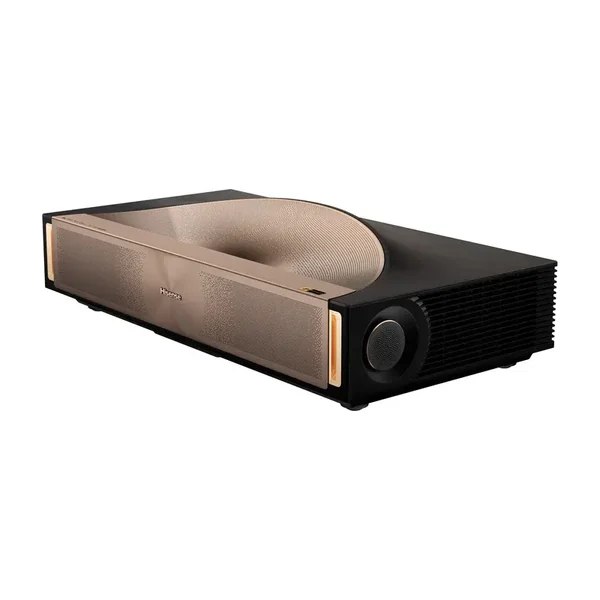
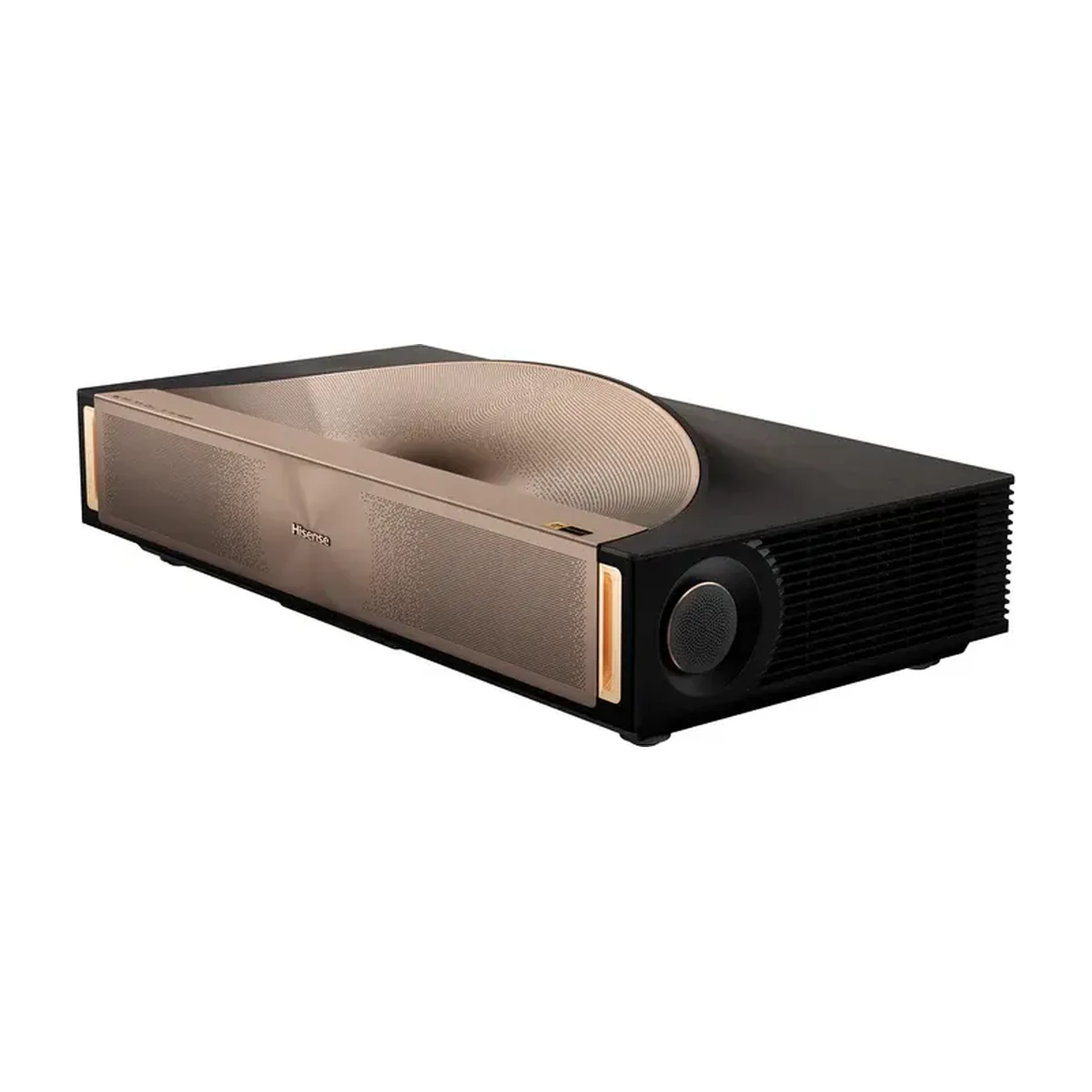
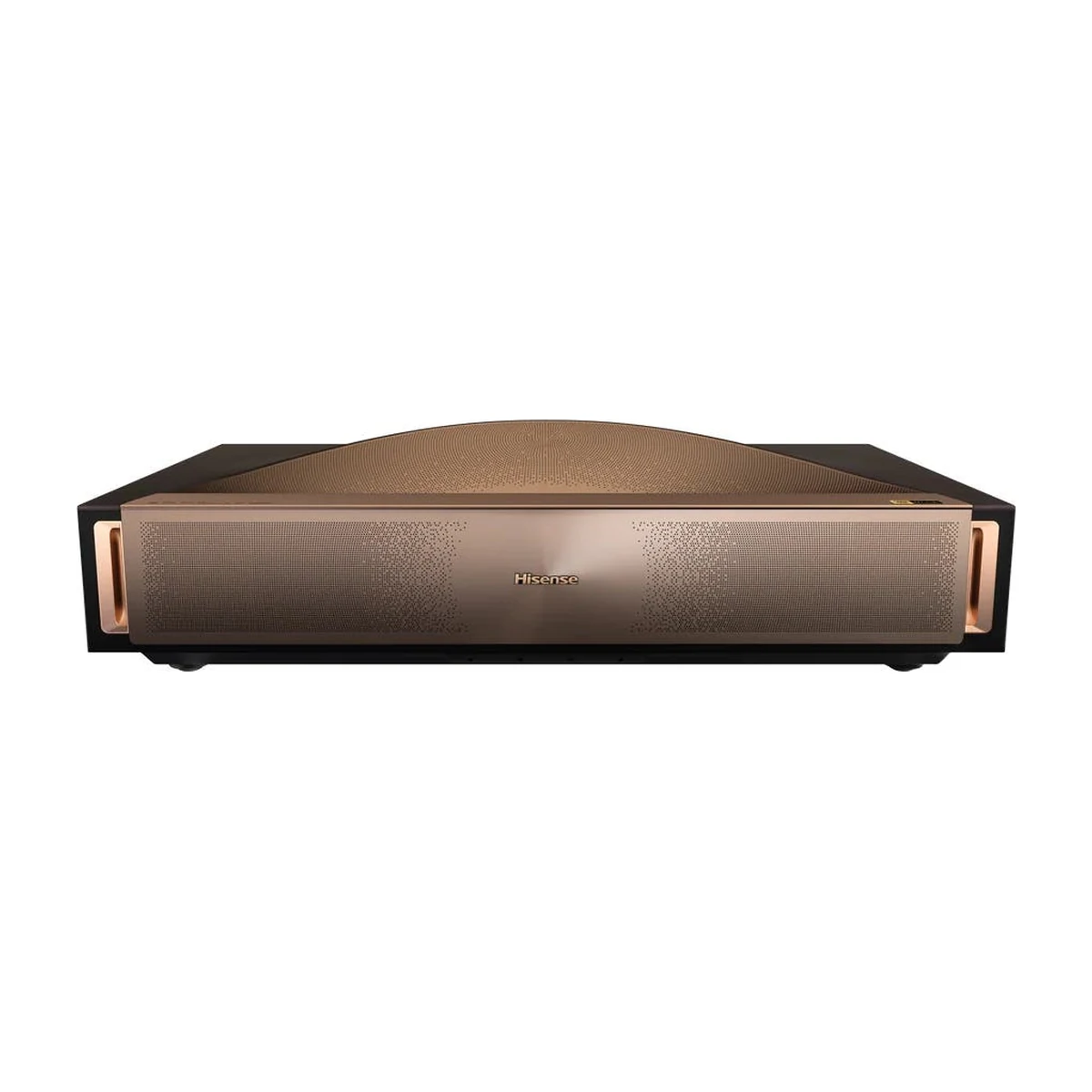
If the question is "can a projector really replace our TV?", the L9Q is Hisense's yes. It claims 5,000 ANSI lumens, a 5,000:1 contrast and 110% of BT.2020, and it is the only projector here with a serious sound system built in: 116 W across 10 speakers in a 6.2.2 layout tuned by Devialet. Google TV with Netflix and an ATSC tuner are on board, and Auto Screen Fit squares the picture for you. It cost $5,999.99 on Hisense's store on November 13, 2026. The catch is the fine print around it: the product page states no return window.
Buy it if
- You want one box under the screen: no soundbar, no streaming stick, no antenna adapter
- The projector will run all day in a room with windows
- You are planning a very large screen: it is rated up to 200 inches
Skip it if
- You game competitively: the AWOL LuxVision adds VRR and 4K at 120 Hz at the same price
- You watch at night and already own a sound system: the Hisense PX3-PRO has the same color for $3,500 less
Can the L9Q really replace a television?
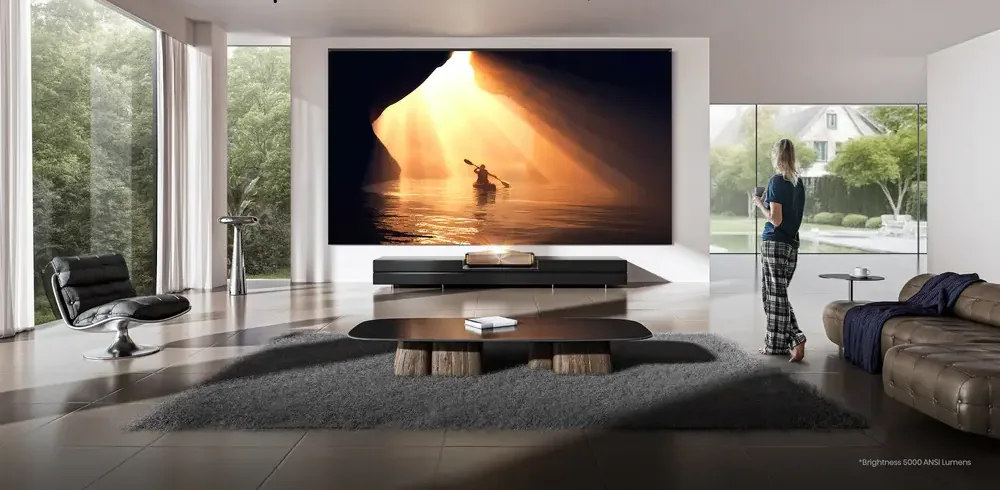
Three things usually stop a projector from being the family TV: it is too dim at lunchtime, it sounds thin, and somebody has to explain to the kids which remote does what. The L9Q goes after all three. Hisense claims 5,000 ANSI lumens, enough to keep a 120-inch picture lively with the blinds open when it is paired with an ALR screen. Google TV runs Netflix natively, and the built-in ATSC tuner takes an antenna, so local channels work like on any TV.
It is No. 1 of 8 in our ranking of the best laser TVs for that reason: nothing else we list puts this much brightness, sound and TV plumbing in one cabinet.
How good is 116 W of built-in sound?
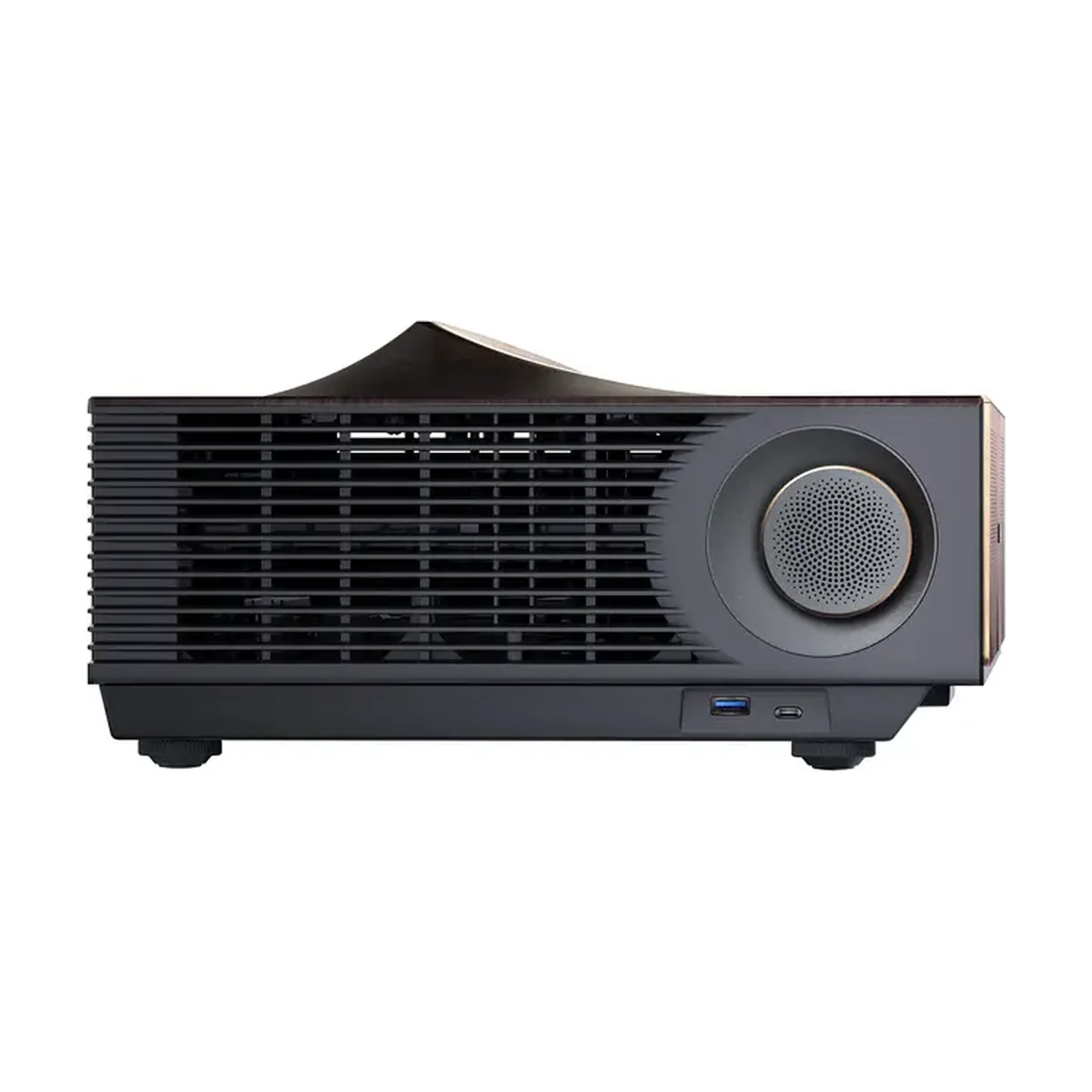
Most ultra short throws ship with 20 to 60 W of stereo speakers, and most owners add a soundbar within a month. Hisense gives the L9Q ten speakers in a 6.2.2 layout, tuned by the French audio company Devialet, for 116 W in total, with Dolby Atmos and DTS:X decoding. The ".2.2" means two bass drivers and two up-firing channels for height effects.
We quote the wattage because it is the only objective figure a brand publishes, and by that figure the L9Q has nearly double the next projector on this list. If you own a real surround system, you are paying for speakers you won't use; the PX3-PRO exists for you.
What about gaming on the L9Q?
Hisense publishes one number: 12 ms at 2K/120 Hz in Game Mode. That is quick enough for almost everything, and ALLM switches the mode on automatically with a console. Two of the four HDMI inputs are HDMI 2.1; the other two are HDMI 2.0, and eARC sits on HDMI 3. VRR isn't listed on the page, so if tear-free variable frame rates matter to you, look at the LuxVision comparison before you decide.
Video: "Hisense L9Q Laser TV | Your Deluxe Home Cinema", Hisense on YouTube. Not made by us; chosen because it shows the projector or the topic clearly.
What's in the box?
Per Hisense: the L9Q projector, a backlit voice remote with two AAA batteries, a power cord, a quick start guide and a cleaning kit. The projector is sold on its own on this page; a screen is a separate purchase.
How do you set it up?
At 28.4 lb and 24.6 inches wide, this wants a solid console. With its 0.18:1 throw ratio, the lens plane sits about 15.7 inches from the screen for 100 inches and about 23.5 inches for 150. Place it, let Auto Screen Fit square the picture to the screen frame, plug the antenna into the tuner and sign in to Google TV. Connect your console to an HDMI 2.1 port, not one of the two HDMI 2.0 ones.
For another picture size, our throw distance calculator works out the gap between lens and screen for the L9Q.
What does it really cost?
The screen. Hisense rates the L9Q for 80 to 200 inches, and a good ALR screen at 120 to 150 inches can cost $1,000 to $3,000 on its own. You can skip the soundbar, which most rivals can't say. Hisense's page doesn't state shipping terms or a return window, so confirm both at checkout.
Per 1,000 lumens claimed, that is $1,200: the figure our tie-break uses when two projectors land on the same score.
What do we like, and what should you know?
- 5,000 ANSI lumens, per Hisense: second-brightest on our list, built for daytime
- 116 W, 6.2.2 channels, 10 speakers tuned by Devialet: you can skip the soundbar
- Google TV with Netflix, plus an ATSC tuner for over-the-air channels
- Pictures from 80 to 200 inches, with Auto Screen Fit
- Dolby Vision, HDR10+ and IMAX Enhanced; 2-year limited warranty
The catch: Hisense's product page gives no return window, so ask before you spend $5,999.99. The gaming figure is 12 ms at 2K/120 Hz: good, but there is no VRR listed and only two of the four HDMI ports are HDMI 2.1. The page doesn't say whether focus is motorized.
Hisense L9Q specifications
| Price | $5,999.99 at Hisense, checked November 13, 2026 |
|---|---|
| Shipping | Not stated |
| Light source | RGB triple laser (TriChroma) |
| Brightness | 5,000 ANSI lumens, per Hisense |
| Resolution | 4K |
| Imaging chip | 0.47-inch DLP |
| Native contrast | 5,000:1 |
| Color gamut | 110% BT.2020, Pantone validated |
| HDR formats | Dolby Vision, HDR10+, HDR10, HLG, IMAX Enhanced |
| Throw ratio | 0.18:1 |
| Lens to screen | 15.7 in for a 100-inch picture, 18.8 in for 120 inches |
| Picture size | 80 to 200 in |
| Focus | Not stated |
| Alignment | Auto screen alignment |
| Input lag | 12 ms at 2K/120 Hz in Game Mode, per Hisense |
| Gaming features | 120 Hz, ALLM |
| Inputs | 2 HDMI 2.1 (ALLM) + 2 HDMI 2.0, eARC on HDMI 3 |
| Wi-Fi | Wi-Fi 6E |
| Smart TV | Google TV with Netflix, plus an ATSC tuner |
| Speakers | 116 W, 6.2.2 channels, 10 speakers tuned by Devialet, Dolby Atmos, DTS:X |
| 3D | Supported, per Hisense |
| Fan noise | No dB figure |
| Size (W × D × H) | 24.6 × 12.5 × 6.5 in |
| Weight | 28.4 lb |
| Laser life | 25,000 hours, per Hisense |
| Warranty | 2-year limited warranty, per Hisense |
| Returns | Return window not stated on the product page |
| Screen bundle | None on the product page |
| Price per 1,000 lumens | $1,200 per 1,000 lumens |
"Not stated" means Hisense doesn't publish the figure on the pages we read on November 13, 2026.
Why 9.3/10? The score, criterion by criterion
Each criterion is marked from the figure Hisense publishes; anything it doesn't publish gets the lowest mark. The weighted result is placed on our 7.5 to 9.6 scale. The scales and the weights are on our methodology page.
| Price, against the catalog median (dated, US) (20%) | Weak |
|---|---|
| Brightness (lumens claimed by the brand) (20%) | Strong |
| Picture: color gamut, native contrast, HDR formats (20%) | Strong |
| Gaming: input lag, 120 Hz, VRR, ALLM (10%) | Good |
| Placement: throw ratio, picture size, focus and alignment aids (10%) | Strong |
| Smart TV and sound: streaming apps, speakers, Atmos, eARC (10%) | Strong |
| Warranty and return window (10%) | Average |
How much is the Hisense L9Q, and where do you buy it?
$5,999.99 on Hisense's own US store on November 13, 2026.
If that is more than you planned, the AWOL Vision LuxVision costs $5,999 and scores 9.6/10. We link to the brand's store because that is where we read the price and the stock.
What should you ask Hisense first?
- What is the return window on Hisense's own store, and who pays to ship a 28 lb projector back?
- Does the L9Q support VRR, and what is the input lag at 4K/60?
- Is the focus motorized or manual?
- Which screen sizes and types does Auto Screen Fit work with?
Which projectors should you compare it with?
The two closest in price: Samsung The Premiere 9 ($5,999.99, 7.5/10) and AWOL Vision LuxVision ($5,999, 9.6/10). Put all three side by side.
Head-to-heads: Hisense L9Q vs Hisense PX3-PRO, Hisense L9Q vs Samsung The Premiere 9, AWOL Vision LuxVision vs Hisense L9Q.
Rankings with this projector: best ultra short throw projectors, best ust projector for bright room, best ust projector for gaming, best laser tv, best ust projector for home theater.
Guides that mention it or help you decide: UST projector vs TV, How many lumens do you need.
Where do these figures come from?
- hisense.com/us/en/laser-cinema/80-200-ultra-short-thro…, read November 13, 2026
- hisense.com/us/en/laser-cinema, read November 13, 2026