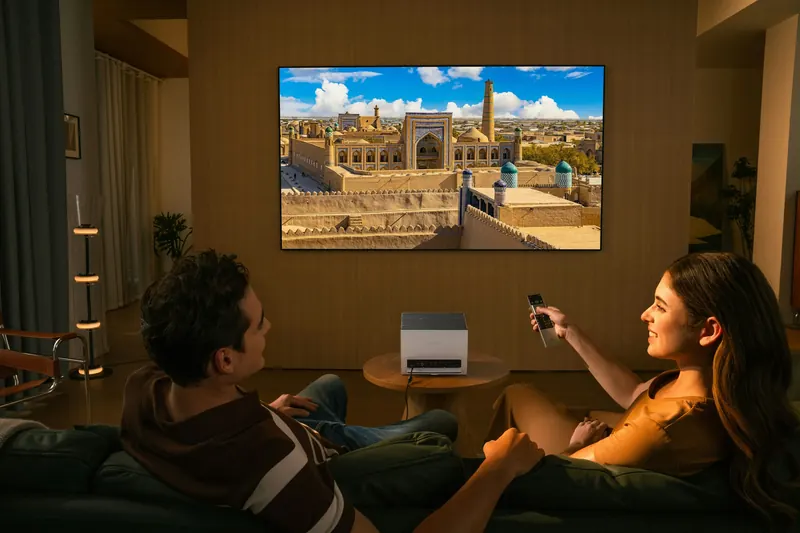
Short answer: yes, an ultra short throw projector needs its own kind of screen, and in a room with any light it should be a UST ALR (ambient light rejecting) screen. Choose lenticular if people sit off to the sides, Fresnel if everyone sits in front and you want the brightest picture, and plain matte white only for a room you can make fully dark. Don't project on a bare wall, and don't buy an ALR screen made for ceiling-mounted projectors: it will reject your projector's light too.
Why can't you just use a wall or a normal screen?
Because of the angle. A regular projector hits the screen almost head-on from across the room. An ultra short throw sits a few inches away and fires upward at a very steep angle, so its light rakes across the surface. Every bump, wave or wrinkle throws a shadow or bends the picture. A painted wall that looks flat to you shows ripples the moment a UST lights it, and a cheap pull-down screen curls at the edges and warps the image.
So the first requirement is flatness: a rigid panel or a tensioned fabric on a frame. The second is about light. A white surface reflects everything in every direction, including the lamp behind you and the window to the left. That is fine in a dark room. In a living room it turns black into gray, however bright the projector.
How does an ALR screen work?
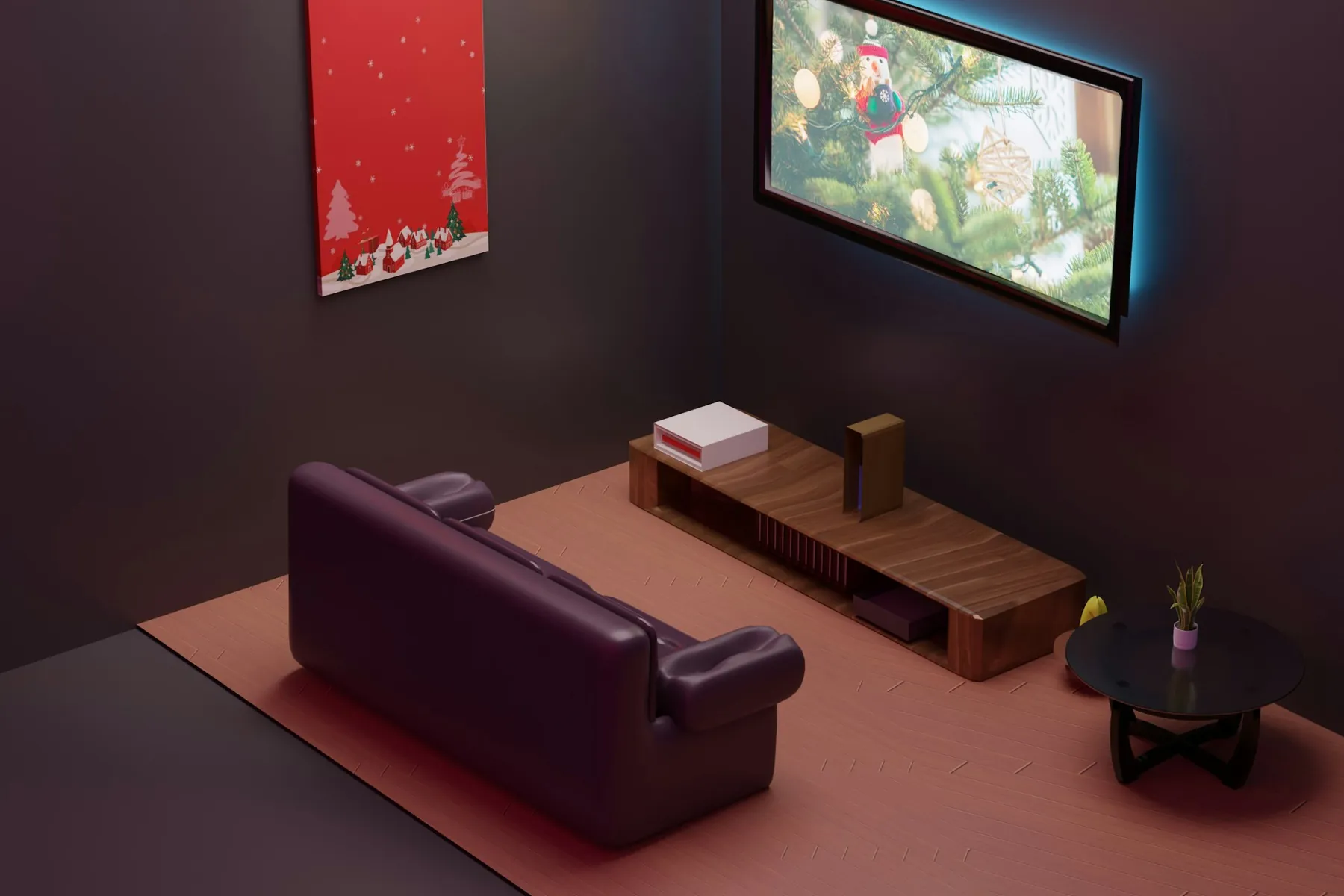
ALR means ambient light rejecting. The surface is not flat paint but a microscopic structure: rows of tiny sawtooth ridges. The face of each ridge that looks down toward the projector is reflective and sends its light out toward the sofa. The face that looks up toward the ceiling is dark and absorbs what falls on it. Light from the projector below is kept; light from lamps and windows above and beside is mostly thrown away.
That is also why direction matters. A UST ALR screen is built for light arriving from below. An ALR screen for a standard projector is built for light arriving from the front, and would treat a UST projector's beam as ambient light. When you shop, the words to look for are "UST", "ultra short throw" or "CLR" (ceiling light rejecting) in the product name.
Lenticular or Fresnel: which one is right for you?
These are the two UST ALR designs, and the difference is the shape of the ridges. On a lenticular screen the ridges run in straight horizontal lines. It rejects light from above very well and looks the same from a wide range of seats, which suits a living room with a sectional sofa. It usually reflects a bit less than the light it receives, so the picture is slightly dimmer than on white.
On a Fresnel screen the ridges are concentric arcs, like half of a lighthouse lens, aimed at the seating position. It rejects light from above and from the sides, and it concentrates the picture toward the middle of the room, so it looks brighter head-on. The price is a narrower sweet spot: from far off to the side the picture dims. Fresnel screens are also rigid panels, so the box is as big as the screen. Family room with seats everywhere: lenticular. Two or three seats straight ahead and a lot of daylight: Fresnel.
Video: "Ultimate UST Projector Screen Comparison - 8 CLR/ALR Screens Tested and Reviewed", The Hook Up on YouTube. Not made by us; chosen because it shows the projector or the topic clearly.
Fixed frame, floor-rising or rollable?
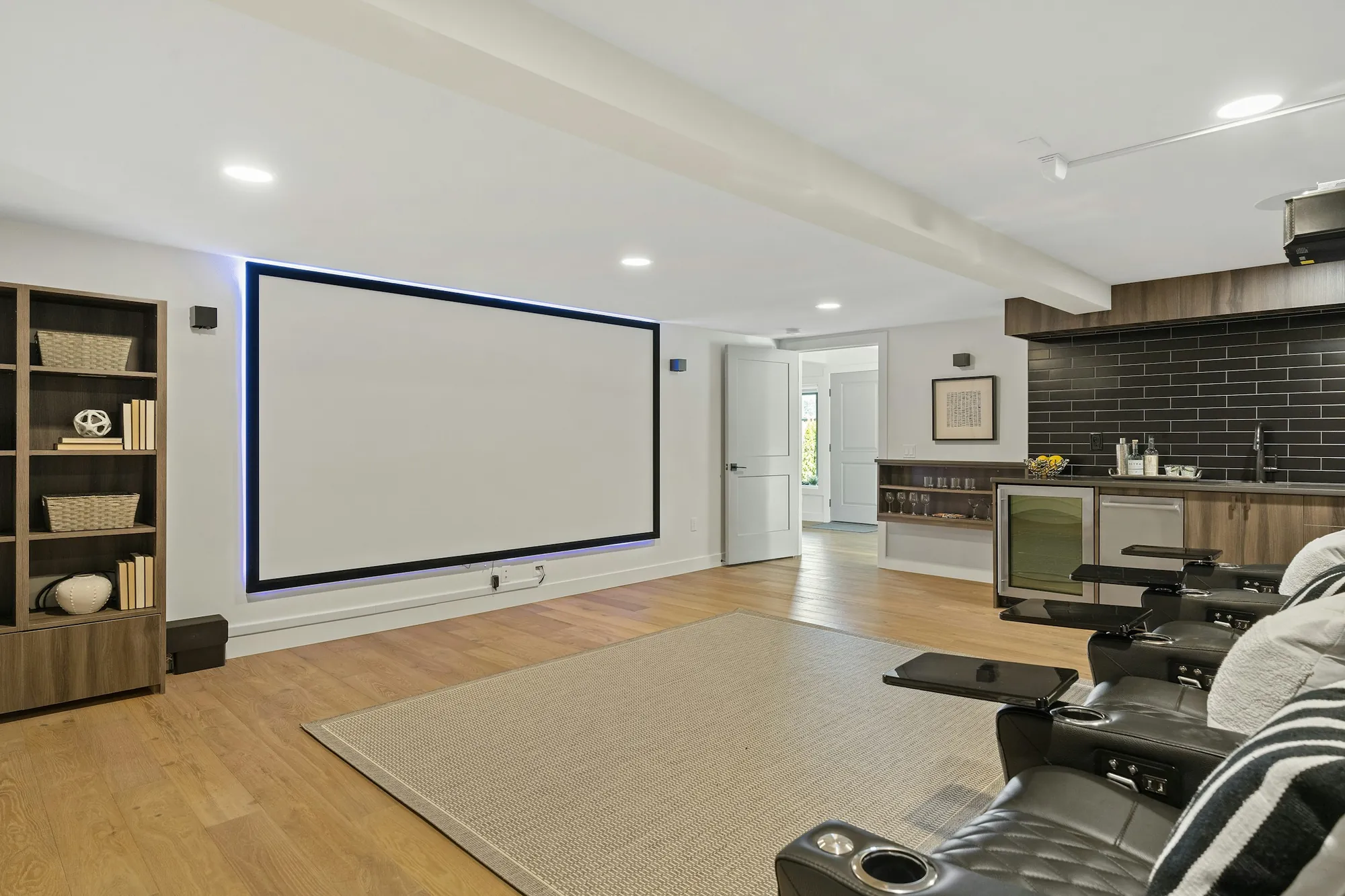
A fixed frame hangs on the wall like a very large, very thin picture. It is the cheapest way to get a flat ALR surface and the most common choice. The screen stays visible when the projector is off: a dark gray rectangle, less shiny than a TV.
A floor-rising screen sits in a long housing on the floor or in the console and rolls up on scissor arms when you switch on. It disappears when you are done, which is the whole dream of a hidden cinema, and it suits rooms where the wall has a window or art on it. It costs more, needs a lenticular surface (Fresnel screens are rigid panels), and adds a motor that can fail. AWOL and Formovie both sell one; here is Formovie's 120-inch floor-rising screen and AWOL's screen range as references for what they look like.
What size should you buy?
Start from the wall and the sofa, not from the projector. Most people are happy when the distance from eyes to screen is 1 to 1.5 times the screen's diagonal: 8 to 12 feet for 100 inches, 10 to 15 feet for 120. Then check three things. The wall: a 120-inch screen is about 105 inches wide and 59 high, plus the frame. The console: the bigger the picture, the further the projector sits from the wall and the lower it must be under the screen. And the projector's rating: the XGIMI MIRA Pro stops at 120 inches, the Epson Lifestudio Grand too; most others reach 150.
Brightness falls as size grows, because the same light covers more area. Going from 100 to 120 inches spreads the light over 44% more surface. With 2,000 to 2,500 lumens, stay at 100 inches in a lit room. Our throw distance calculator tells you how far the lens must be from the screen at each size, for each projector.
Is it worth buying the screen in a bundle with the projector?
Often, yes, and Black Friday 2026 made the point loudly. On November 13, AWOL sold the Aetherion Max with a 120 or 132-inch Cinematic ALR screen for $3,799, which was $200 less than the projector on its own. The LuxVision came with a floor-rising or Fresnel ALR screen at the projector's price. NexiGo added a 100-inch Fresnel screen to the Aurora Pro MKII for $200.
Bundles have a second advantage: one seller answers for the match between projector and screen. Do read what kind of screen is in the box. A "soft gray" or "matte white" screen is not ALR, and a few bundles use them to hit a price. Our ranking of UST projector and screen bundles names the screen type for each.
When is a matte white screen enough?
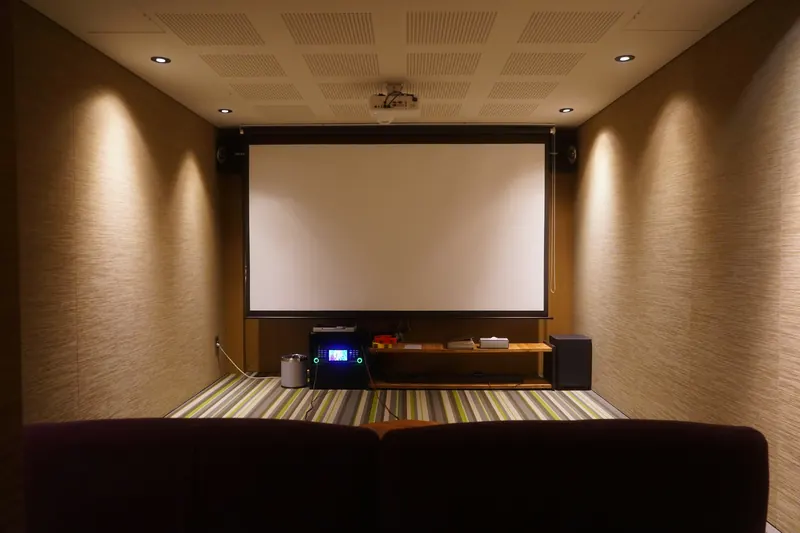
When you control the light completely: a basement, a dedicated room, or a living room you only use after dark with the lamps off. A matte white screen reflects the full output of the projector evenly in all directions, has no sparkle and no sweet spot, and costs a fraction of an ALR screen. On November 13, 2026 AWOL sold the LTV-3000 Pro with a 100-inch matte white screen for $1,799, just $100 over the projector.
It still has to be flat and tensioned; that rule never goes away with a UST. And be honest about the room. If the walls and ceiling are white, they bounce the picture's own light back onto the screen and lift the blacks, and an ALR screen helps even at night. If someone will want the lights on during the game, buy ALR and be done.