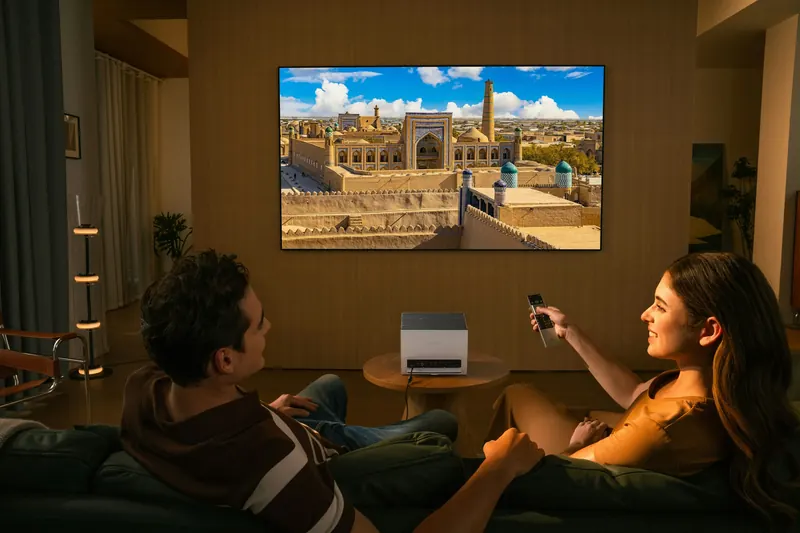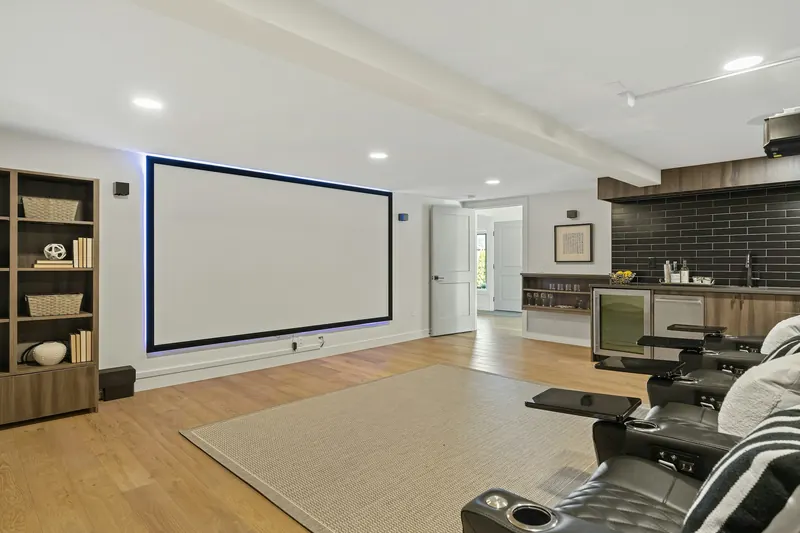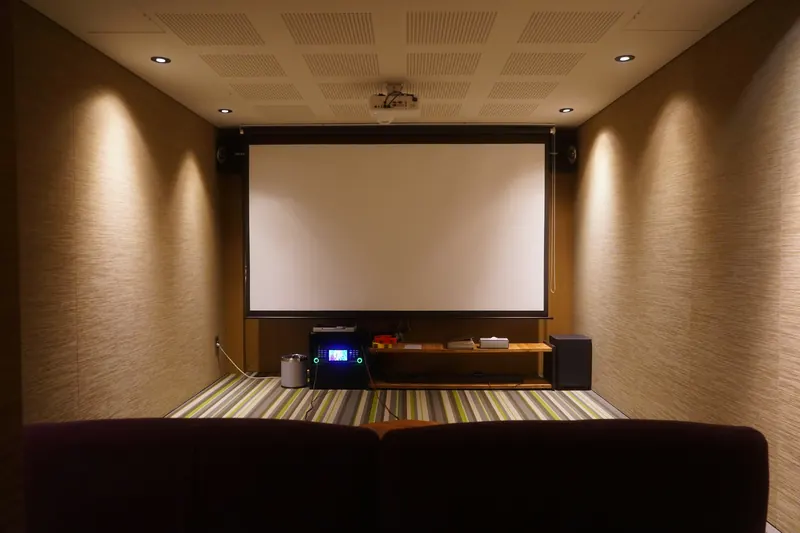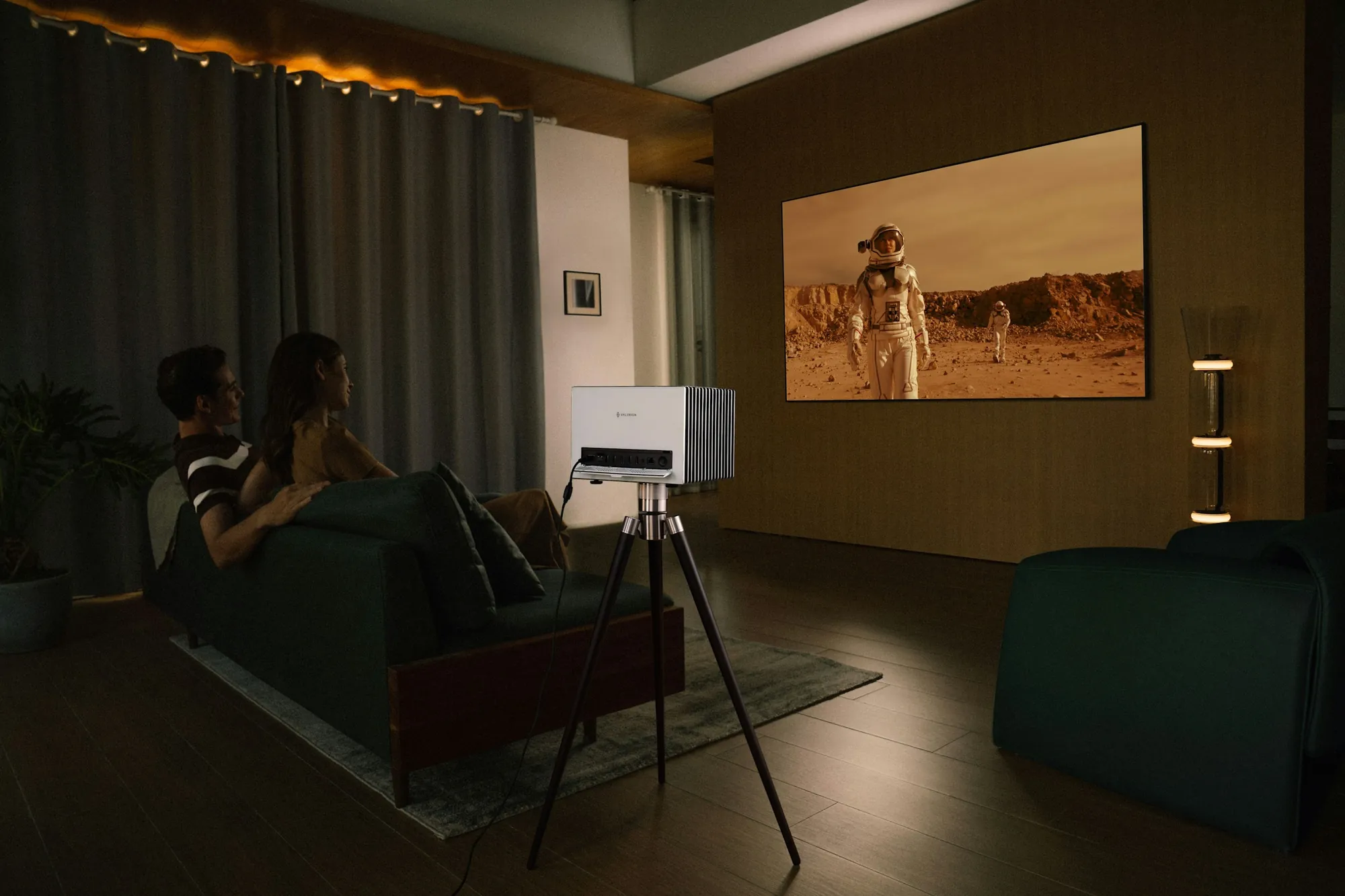
Short answer: a short throw projector makes a 100-inch picture from about 3 to 7 feet away, so it lives on a coffee table or a ceiling mount. An ultra short throw (UST) projector makes the same picture from 14 to 22 inches, so it lives on the media console, right under the screen, like a TV. Pick a short throw for a game room, a golf simulator or a projector you move around. Pick a UST for a living room where the projector replaces the television. This site ranks ultra short throws only: 15 of them, from $1,699.
What is the difference between short throw and ultra short throw?
One number: the throw ratio. It is the distance from the lens to the screen divided by the width of the picture. A ratio of 1.5:1 means the projector sits one and a half picture-widths away. There is no official border between the families, but the industry uses roughly these:
- Standard throw: above 1:1, usually 1.2 to 2.0. The projector sits at the back of the room.
- Short throw: about 0.4 to 1:1. The projector sits in front of the sofa.
- Ultra short throw: under 0.4:1. Every projector we compare is between 0.16:1 and 0.25:1.
To get that close, a UST uses a different optical design, with a wide-angle lens and a curved mirror that bounce the picture steeply up the wall. That design is why a UST looks like a low cabinet with a window on top, and why it needs its own kind of screen.
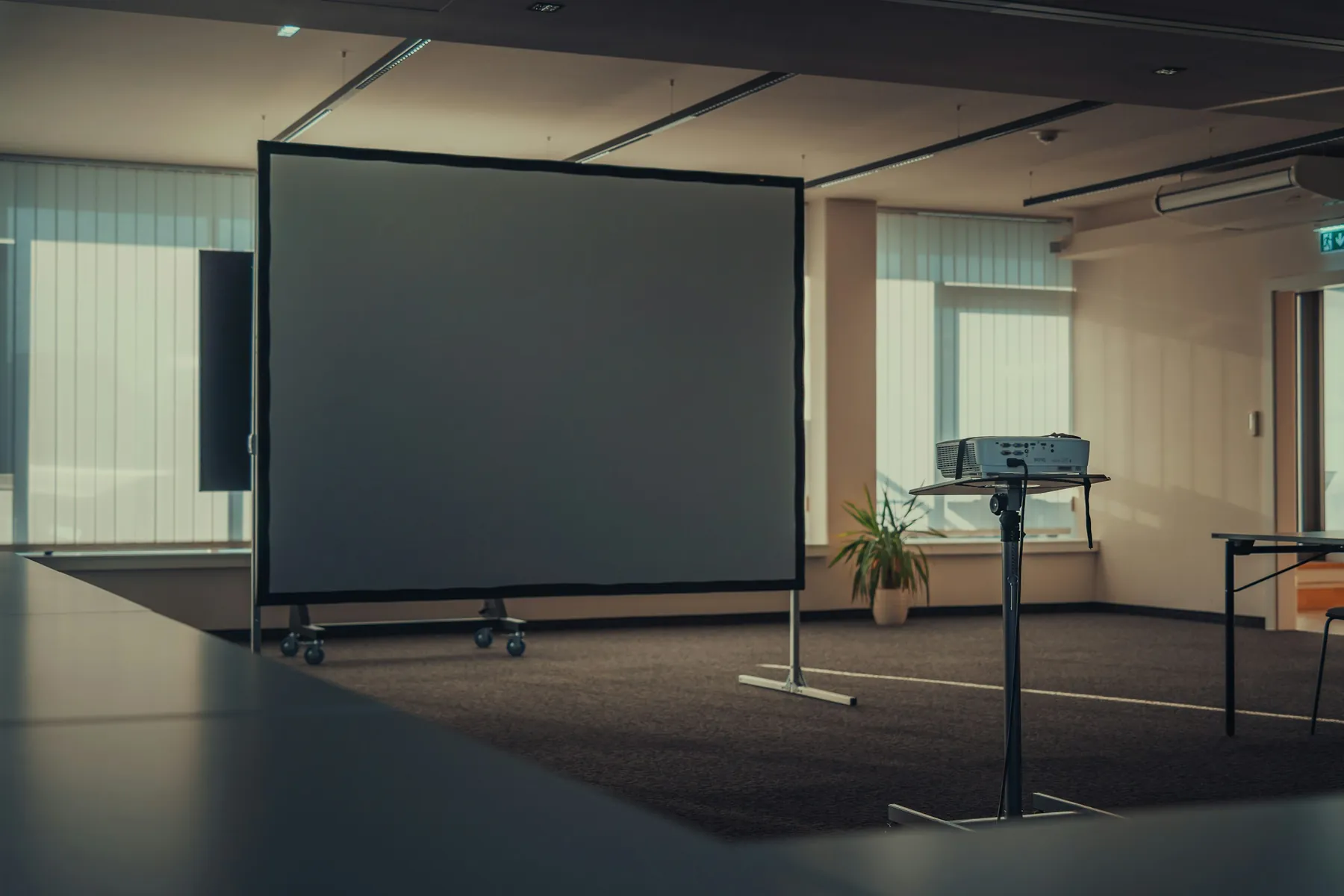
How far from the wall does each one sit?
A 100-inch 16:9 picture is 87.2 inches wide. Multiply by the throw ratio and you have the distance from lens to screen:
- Standard throw at 1.5:1: about 131 inches, or 10.9 feet.
- Short throw at 0.8:1: about 70 inches, or 5.8 feet.
- Short throw at 0.5:1: about 44 inches, or 3.6 feet.
- Ultra short throw at 0.25:1: about 21.8 inches.
- Ultra short throw at 0.16:1: about 13.9 inches.
On our list, the JMGO O2S Ultra sits closest: 13.9 inches from lens to screen for 100 inches, per its 0.16:1 ratio. The XGIMI MIRA Pro needs 15.3 inches and the Hisense PX3-PRO 19.2. Remember that the lens sits toward the back of the cabinet, so the front of the projector ends up even closer to the wall than these figures. Our throw distance calculator gives the distance for any picture size and tells you how deep your console must be.
Which one handles a bright room better?
The ultra short throw, mainly because of the screens made for it. A UST ALR screen has a microscopic sawtooth surface that reflects light arriving from below, where the projector sits, and absorbs light from above. Daylight and ceiling lamps are mostly rejected. It is the single biggest reason a UST can work as a daytime TV.
Those screens do not work with a short throw projector: the light arrives from the wrong direction. A short throw can use a standard ALR screen, but many of them ask for a minimum throw ratio, often well above what a short throw offers, or the picture shows a bright hot spot. Check that figure on the screen's spec sheet before pairing the two. In a dim game room none of this matters, and a plain white or gray screen does the job.
If daylight is your main worry, read how many lumens a UST projector needs next.
Video: "Ultra Short Throw Projector vs. Traditional Projector: Which is Right For You?", Projector Reviews on YouTube. Not made by us; chosen because it shows the projector or the topic clearly.
Which one is easier to install?
They are hard in different ways. A UST needs no mount and no long cable: you put it on a console and plug it in where the TV was. But it is very sensitive to position. A quarter inch of movement shifts the picture by an inch, and a console that isn't level bends the edges. Some models help: the XGIMI MIRA Pro and the JMGO O2S Ultra have automatic screen alignment, and the AWOL LuxVision has optical lens shift, which is rare on a UST. Our UST projector setup guide walks through the first evening.
A short throw is more forgiving optically, and most have zoom and keystone. The work is elsewhere: it needs a spot 3 to 7 feet in front of the screen. That means a coffee table, where it gets bumped and its fan sits next to your ears, or a ceiling mount with power and HDMI run overhead.
What about shadows, glare and eye comfort?
With a UST, nobody can walk between the projector and the screen, because there is no room to. The only way to cast a shadow is to stand right against the wall. Children do it once and move on. And since the light source sits below the screen and points away from the sofa, nobody looks into the lens.
A short throw is better than a projector at the back of the room, but anyone crossing the first few feet in front of the screen cuts the picture, and a player standing close for a motion game or a golf swing can do the same. Ceiling mounting solves most of it. With a table-top short throw, also think about where the lens points: at seated eye height for whoever sits across from it.
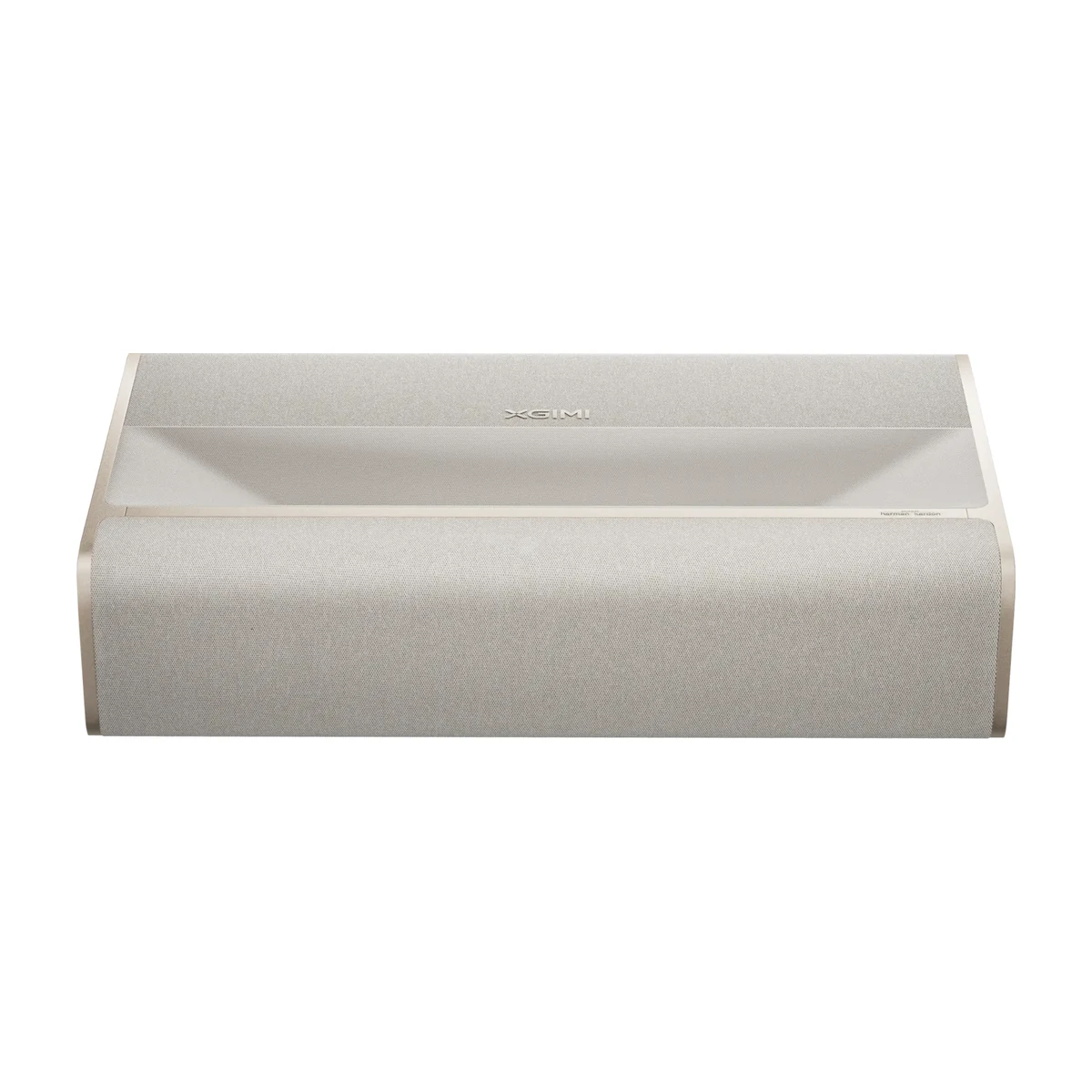
Which costs less in the end?
Usually the short throw. The optics are simpler, so short throw models tend to cost less than a UST of the same resolution and brightness, and they work with ordinary screens. We don't track their prices here, so compare on the day you shop.
For a UST, count the projector and its special screen together. On November 13, 2026 our list ran from $1,699 to about $6,000 for the projector, and a 100 to 120-inch UST ALR screen adds $500 to $1,500. Some brands bundle the two: see our ranking of UST projector and screen bundles. What you buy with the extra money is the television-like placement and the daylight performance. If you don't need either, you don't need to pay for them.
When is a short throw projector the better buy?
When the projector is for an activity, not for the living room. Three typical cases:
- A game room or a golf simulator. The projector sits on the floor or the ceiling a few feet from an impact screen, and input lag and price matter more than daylight.
- A projector that moves. Backyard movie nights, a classroom, a second home. A short throw sets up on any table in two minutes and forgives a wobbly one.
- A tight budget for a dark room. If you can darken the room and mount the projector overhead, you get a big picture for less.
When is an ultra short throw the better buy?
When the projector replaces the TV. If you want 100 to 150 inches in a room people live in, with daylight, a sofa, kids and a dog, the UST is the one that behaves like a television: on the console, cables hidden, streaming apps and speakers built in, nothing hanging from the ceiling.
For that use, start with the XGIMI MIRA Pro (9.5/10, $1,699) if the budget is tight, or go straight to our ranking of the best ultra short throw projectors. And if you are still weighing the projector against a big television, the UST projector vs TV comparison settles it.
The projectors in this guide, side by side
| Projector | ||||
|---|---|---|---|---|
| Brightness (brand) | 3,600 ISO lumens | 3,000 ISO lumens | 6,000 ISO lumens | 3,000 ANSI lumens |
| Light source | RGB triple laser | RGB triple laser | RGB triple laser | RGB triple laser |
| Throw ratio | 0.16:1 | 0.175:1 | 0.18:1 | 0.22:1 |
| Native contrast | 4,000:1 | Not stated | 10,000:1 | 3,000:1 |
| HDR formats | Dolby Vision | Dolby Vision, HDR10+ | Dolby Vision, HDR10+, IMAX Enhanced | Dolby Vision, HDR10+, IMAX Enhanced |
| Lowest input lag | No figure | 1 ms (brand) | 1 ms (brand) | No figure |
| Smart TV | Google TV with Netflix | Google TV | Google TV | Google TV with Netflix |
| Warranty | 1-year | 2-year | 2-year | 2-year |
| Where to buy | Check price at JMGO | Check price at XGIMI | Check price at AWOL | Check price at Hisense |
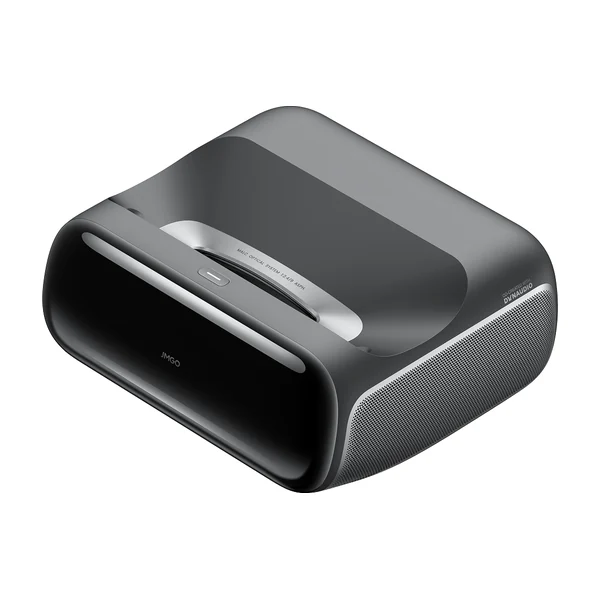
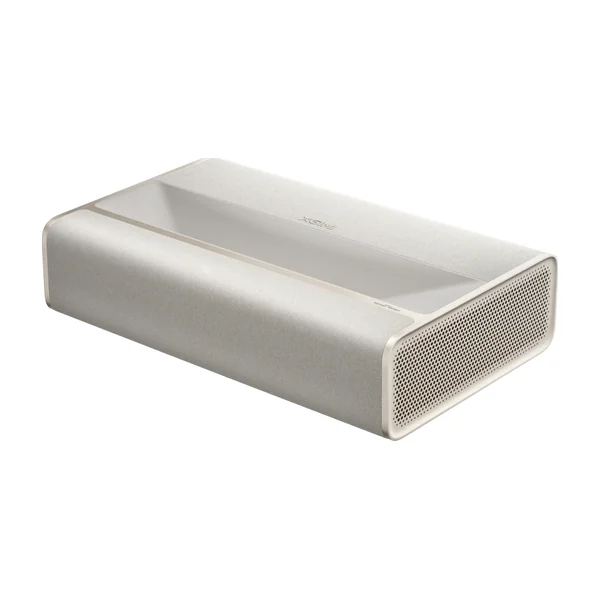
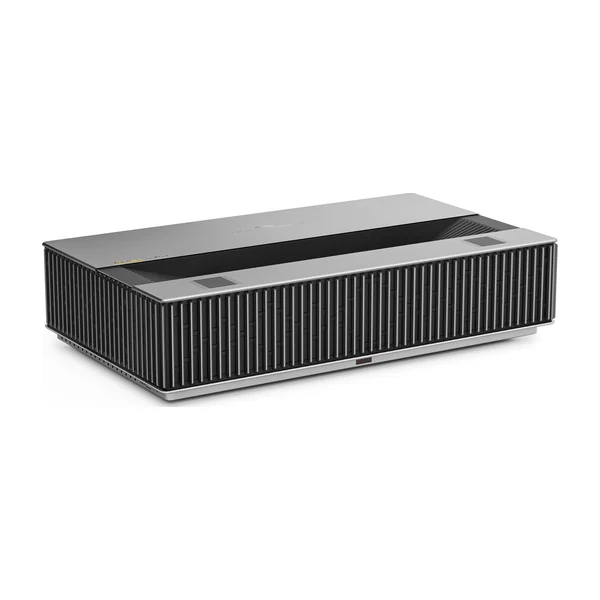
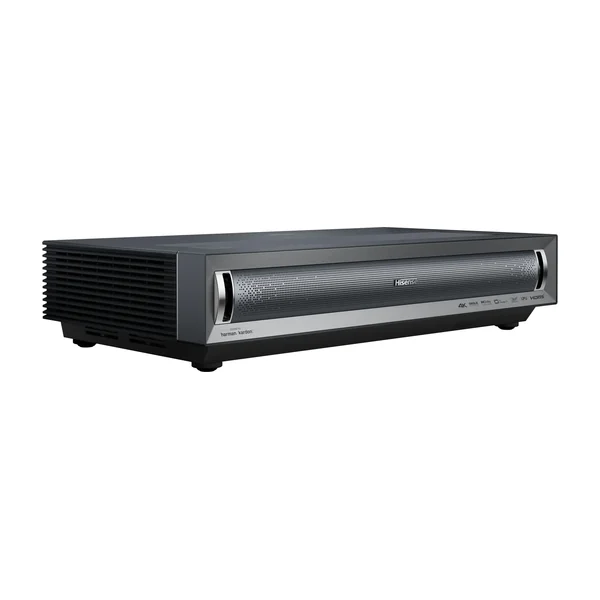
✓ marks the best figure of the row. Prices checked November 13, 2026 on each brand's own US store.